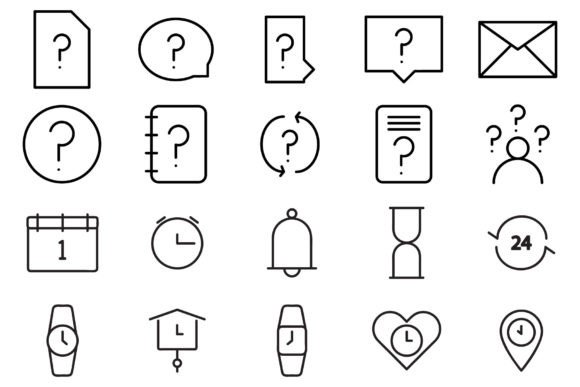
Evaluating Line Vector Icon Monoline for Modern Design Projects
The visual landscape of digital design is increasingly defined by clarity and simplicity. Among the resources that facilitate this aesthetic, line vector icon sets in a monoline style have become a significant tool. This analysis examines the practical value and application of such collections, focusing on the core characteristics that define Line Vector Icon Monoline assets and their fit within professional workflows.
Core Characteristics of Monoline Icon Design
Monoline icons are distinguished by their use of a single, consistent stroke weight to form each graphic element. This approach results in a clean, uncluttered visual language. The key strength lies in the reduction of complexity; shapes are simplified to their essential forms, enhancing immediate recognition. When evaluating a Line Vector Icon Monoline set, the consistency of stroke width across the entire collection is a primary marker of quality. This uniformity ensures that icons maintain a cohesive appearance when used together, whether in a navigation menu, an onboarding sequence, or a printed infographic.
Furthermore, because these icons are built as vector graphics, they are inherently scalable. This means they can be resized from a tiny interface element to a large poster graphic without any loss of detail or introduction of pixelation. This flexibility is a fundamental practical advantage, allowing designers to use the same asset across multiple platforms and output mediums.
Practical Applications and Real-World Performance
The utility of a well-crafted monoline icon set extends across numerous design disciplines. In user interface (UI) and user experience (UX) projects, these icons contribute to intuitive navigation. Their minimalistic form reduces visual noise, allowing users to focus on functionality and content. For example, a set of monoline icons for e-commerce—representing a shopping cart, credit card, or package—can integrate seamlessly into a checkout flow without dominating the layout.
In marketing and presentation materials, such as infographics or website headers, the sleek style of Line Vector Icon Monoline assets supports a modern, professional brand image. Their elegance can elevate communication without appearing overly decorative or distracting. Social media creatives, educational slides, and blog graphics also benefit from this approach, where icon clarity aids in quickly conveying concepts to a broad audience.
Usability and Integration Considerations
From a workflow perspective, the usability of an icon set depends on its organization and file formats. A professional collection should typically offer icons in standard vector formats like SVG, as well as raster formats like PNG for convenience. SVG files are particularly valuable for web and app design, as they can be styled directly with CSS—changing color, stroke width, or even adding animations—which provides tremendous creative control and long-term adaptability.
The thematic range of the set is another critical factor. A versatile Line Vector Icon Monoline library should cover common categories: communication, technology, finance, health, travel, and user actions. This breadth ensures designers can find appropriate icons for diverse projects without needing to source from multiple, stylistically inconsistent packs.
Audience Fit and Project Alignment
Identifying who benefits most from these resources helps in selecting the right assets. Professionals such as UI/UX designers, graphic designers, and product developers find high value in cohesive icon sets that accelerate prototyping and final design. The time saved in not creating custom icons from scratch for every project is a tangible efficiency gain.
Entrepreneurs, small business owners, and marketers who produce their own promotional materials can leverage monoline icons to achieve a polished look without extensive design expertise. The simplicity of the style is forgiving and easier to implement consistently than more complex illustrative icons.
Educators, bloggers, and publishers creating digital content require clear visual aids. The readability of monoline icons at various sizes makes them suitable for diagrams, instructional materials, and data visualizations. Freelancers and serious hobbyists across creative fields also appreciate the reliability and professional presentation a quality set provides, enhancing their personal or client work.
Strengths and Potential Limitations
The primary strengths of a Line Vector Icon Monoline collection are its visual consistency, scalability, and versatility. The clean aesthetics align with contemporary design trends and user expectations for minimal interfaces. The vector foundation guarantees reliability for future projects and output requirements.
However, a balanced evaluation must consider possible limitations. The monoline style, by its nature, may not suit projects requiring high detail, textured illustration, or a more expressive, emotional tone. For instance, a children’s educational app or a brand centered around ornate heritage might find the style too austere. Additionally, the utility of any icon set depends on its completeness and the designer's specific needs; a set lacking in a niche category (like medical equipment or specialized industry tools) may require supplementary assets.
Recommendations for Selection and Use
When considering a monoline icon set, examine the stroke consistency across a sample of icons. Check the available file formats and ensure they match your primary software and delivery platforms. Review the licensing terms for commercial use to avoid project restrictions.
In practice, to maximize effectiveness, maintain a consistent color application across your selected icons within a single project. Leverage the vector nature by customizing colors to match your brand palette exactly. For dynamic web projects, consider using the SVG format to enable interactive states, such as changing an icon’s color on hover, which enhances user engagement.
Ultimately, the decision to incorporate a Line Vector Icon Monoline set into your toolkit hinges on the alignment of its characteristics with your project goals. For modern digital and print design that prioritizes clarity, scalability, and a streamlined aesthetic, these resources offer substantial practical value. They serve as a reliable, flexible foundation for visual communication, capable of elevating a wide range of professional and personal design endeavors.